0.15.0 on the 31 GB sample database
Every format change runs in stages, and only the last one cannot be undone.
Follow 0.15.0 onto the sample memory database: 3.1 million nodes, 2.6 million vectors, a writer, a standby and one reader. Each stage shows its time before anyone signs.
- Stage 1, 21 minrestore point restored to a clone, checked
- Stage 2, 24 min0.15.0 converts the clone, replays, checks again
- Stage 3, 4 minreaders restart on 0.15.0, reading both formats
- Stage 4, signedthe writer builds format 7 indexes as writes land, then cuts over
- Stage 5, day 14on approval, the old restore point is retired: the one-way stage
A backup nobody has restored from is a hope.
Why not snapshot the bucket and change the tag? Because after the first new writer, older versions refuse the database. So the restore is tested before anything moves, and that costs about an hour of stages and one approval.
Why the readers move first and the writer moves last.
A new version reads both formats; an old version reads only its own. The release notes you read this week ask for the same order.
- 01Readers firston 0.15.0, still reading format 6
- 02The writer waitsnothing in your bucket is format 7 yet
- 03Writer laston your approver's signature; every reader opens 7
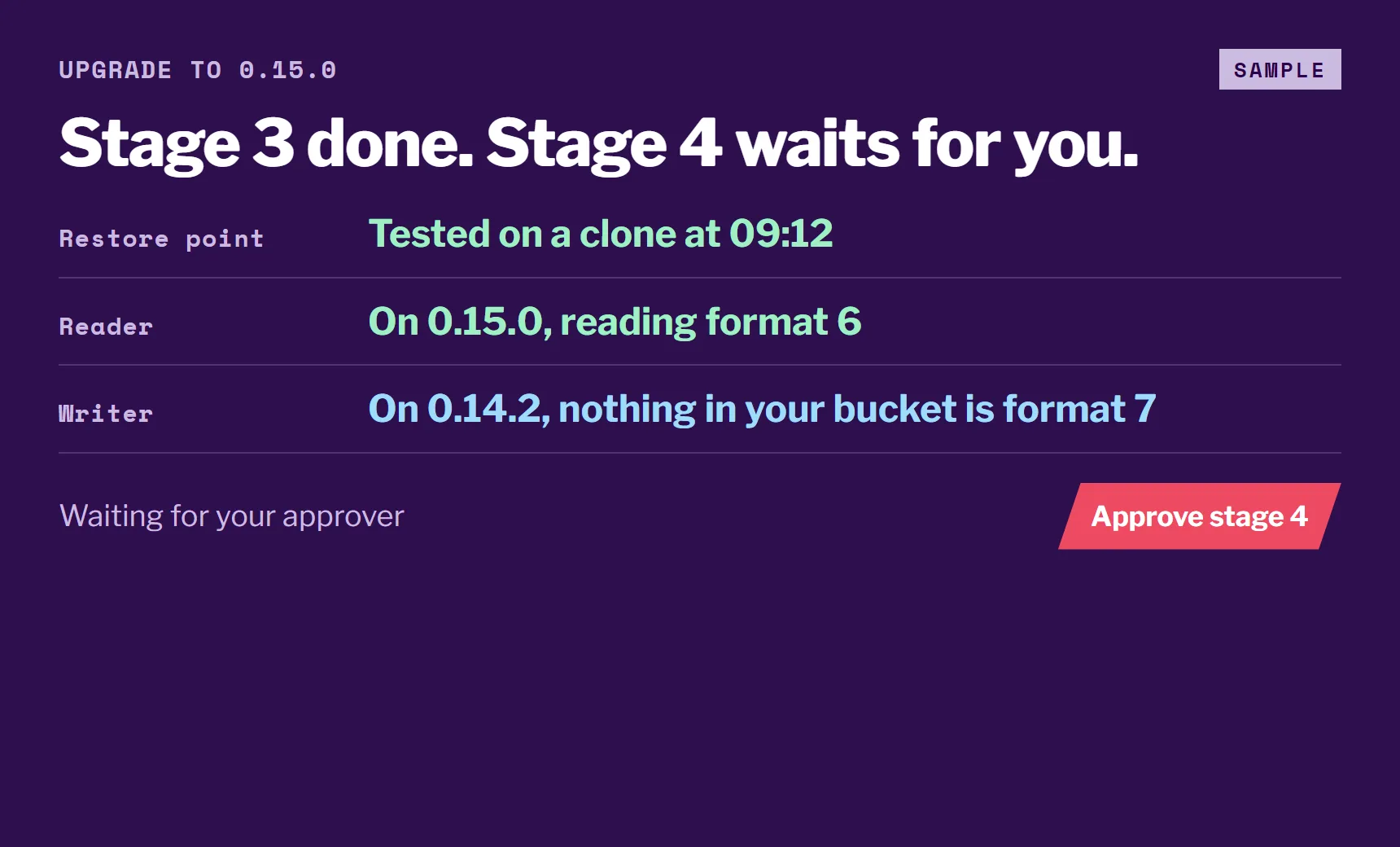
Sample, mid-way: restore point tested at 09:12, reader on 0.15.0, writer on 0.14.2, waiting for you.
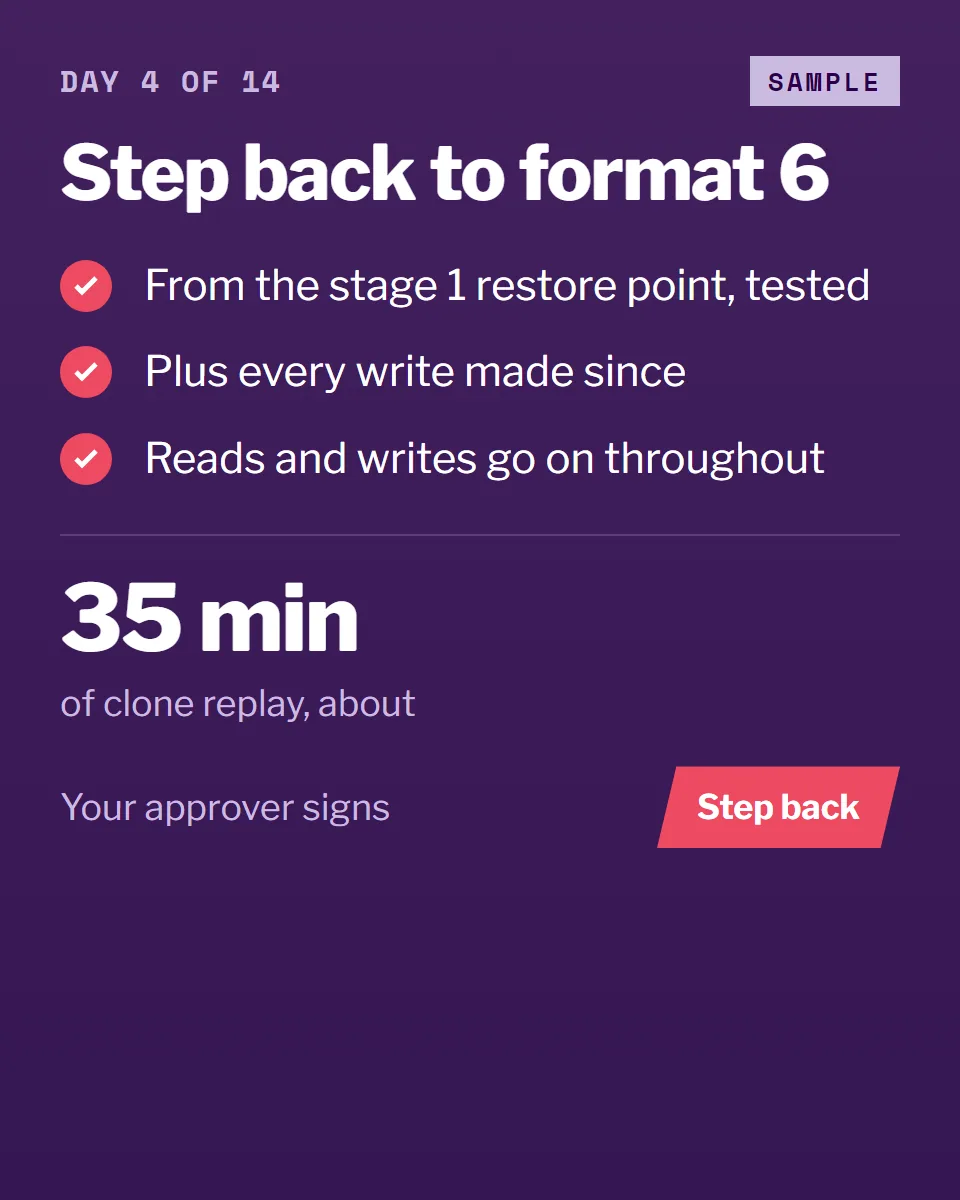
What stepping back costs, depending on the day you decide.
Day 4 in the sample: text searches on format 7 run slower, so the approver signs a step back. Reads and writes go on throughout, nothing written is lost, and the fix is gone until the next attempt.
- 01
Checked first
40 GB of writable cache, 16,384 open files
- 02
Before the writer moves
readers restart on 0.14.2; nothing is lost
- 03
Inside the window
35 minutes of clone replay on day 4
- 04
After day 14
an export and an import onto new machines, planned, hours long